
Beyond Late Pa Moses Akande Onigbinde and Late Oba Jimoh Oladunni Oyewumi Ajagungbade III, there’s a third name that belongs in this same conversation about Ogbomoso’s business titans in Jos, and his rise came earlier than both of theirs. Chief David Oyediran Olagbemiro didn’t just trade in Jos. For a stretch of decades, he practically ran its commerce.
He arrived in Jos as a toddler, strapped to his mother’s back, too young to remember the journey itself, only that the town felt cold, welcoming, and full of promise. He grew up watching it expand alongside the tin boom, in a city centre so well planned it could pass for a European town. Just as he was old enough to dream of building his own trade in the only home he’d known, his parents sent him away to Abeokuta to learn the trade properly under an uncle.
He hated it at first. Jos was home, and Abeokuta felt like exile. But those years abroad taught him hard work and financial discipline, lessons he carried straight back to Jos the moment he was free to choose his own path. “When I got to Abeokuta,” he later said, “I decided that I’ll go back to Jos because I couldn’t stay there.”
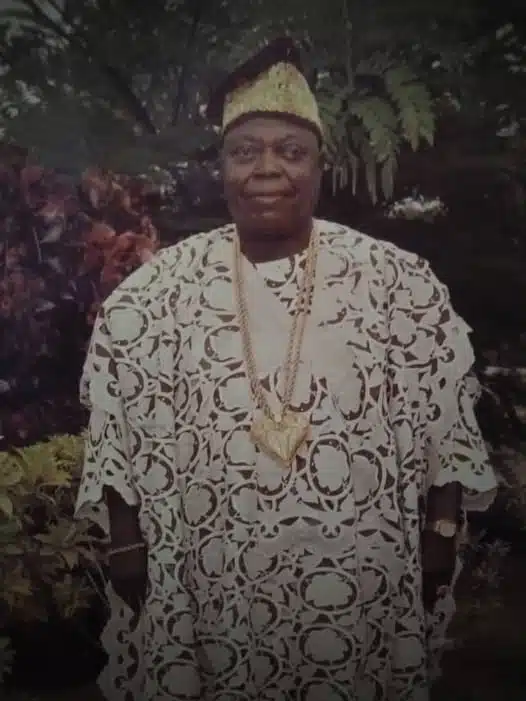
That return changed everything. From a modest shop selling wares, Chief Olagbemiro built an empire that stretched across manufacturing, transportation, and large-scale distribution for breweries and multinational trading giants like GBO, CFAO, UAC, and UTC. By the 70s and 80s, his name was practically synonymous with trade across Northern Nigeria.
His boldest move, though, was on the road itself. Before him, anyone travelling from Jos to Ogbomoso had to squeeze onto Lagos-bound buses, a journey that swallowed an entire day, and the route was tightly held by an Independence Hotel cabal that allowed no competition. Chief Olagbemiro broke that monopoly with his own fleet of luxury buses, the first of their kind on that route, cutting both cost and travel time, and earning himself the quiet title of chief moderniser of Jos-Ogbomoso transport.
But it wasn’t just his business sense that people remembered. Prof. Barr. Oyelami told me that Chief Olagbemiro was loved because he was a free and kind man, a kindness that spilled straight into how he ran his buses. If the fare home was ₦5 and a student or young person showed up at the terminal with only ₦2, Baba would never turn them away. He had a soft spot for young people especially, and everybody who knew him will tell you he was a giver like no other.
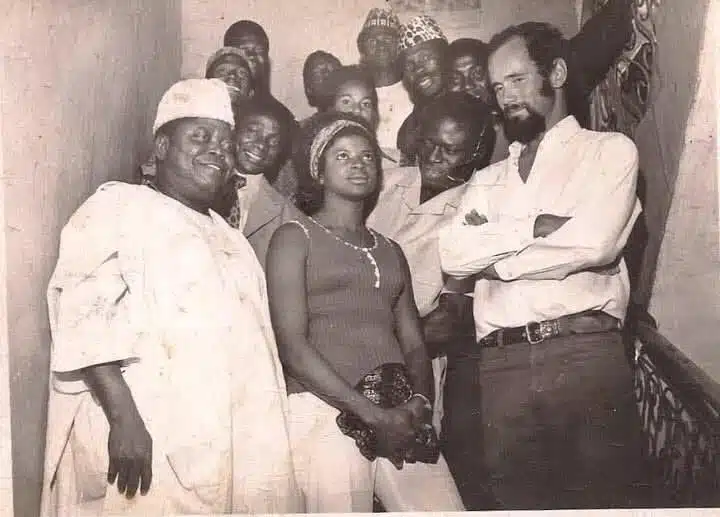
That love for people extended to his love for football too. His son, Late Chief Layi Olagbemiro, captained the legendary Mighty Jets of Jos, the club that made history as the first winners of the Nigerian League in 1972 and the first Nigerian club side to represent the country as a national team. In the early 1970s, fresh off a First Nigerian League Cup win, the entire Mighty Jets team was hosted at Chief Olagbemiro’s own house, a family home doubling as a gathering place for the city’s biggest football heroes. It’s a piece of family history one of his grandsons still honours today, sharing the memory and a photograph from that visit on the anniversary of his grandfather’s passing.
That same warmth is something we encountered firsthand while making the documentary first from Asiwaju Olajide Olagbemiro who has been so supportive throughout the production of this documentary and then from mama Olagbemiro herself. We visited Mama Chief Mrs Mopelola Olagbemiro in Ogbomoso, who received us warmly and spoke beautifully about the story of how Ogbomoso people found a second home in Jos, she’s one of the many voices featured in “A Road From Ògbómọ̀ṣọ́ to Jos.”
Chief David Oyediran Olagbemiro retired in the late 1980s and returned home to Ogbomoso, where he lived out his final years in peace, his name already written in gold across the business history of Jos. His legacy didn’t end with him either; his descendants still carry the family name forward in Jos today, and one of his sons, Olajide Olagbemiro, now sits as the Oba of Yorùbás in Jos.

Two years ago, my good friend Àyánkọ́lá Àyánwuyì and I began working on a documentary titled “A Road From Ògbómọ̀ṣọ́ to Jos.” Private screenings will hold on 10th September, 2026, at the Oluseun Onigbinde Resource Centre, Ogbomoso, by 10am and 4pm, and at Mee’s Palace Cinema, Rayfield, Jos, by 12pm.
Business Email — hello@johnsonokunadea.com