
Long after he became Ṣọ̀úń of Ògbómòṣóland, Ọba Jimoh Ọládùnní Oyèwùmí carried one more title that quietly tied his story to Jos until the very end: pioneer and substantive Chancellor of Plateau State University, Bokkos, a position he held until his death in December 2021.
When Ọba Oyèwùmí moved out of Ilé Ọdẹ́fárá in Jos to chase his education, he never looked back, not in Jos, and not later in life. Independence became the foundation everything else was built on.
He carried that same boldness into business. When banks first arrived in Jos, most traders kept their distance, but Prince Oyèwùmí went ahead anyway. Banking gave him access to capital his peers didn’t have, and that capital let him move faster than everyone around him.
In 1953, he bought a plot on Pump Street and built his first house for £800. Later, when land opened up at what is now Murtala Mohammed Way, near the old Gengere labour camp, he bought in alone after his contemporaries turned it down. That plot is now part of the commercial centre of Jos.
Then came Hotel Terminus, built on what used to be a refuse dump beside Jos Main Market. It grew into one of the town’s most important social and business landmarks, hosting international acts and shaping Jos nightlife for decades.
Ọba Oyèwùmí went on to build two more Hotel Terminus, one in Ògbómòṣó and one in Òṣogbo, carrying the Terminus name along the same road that had first carried him from home to Jos.
Every one of those years in Jos shaped the man who would eventually lead Ògbómòṣó. He learned to see opportunity where others saw risk, and to hold his ground on his own judgment. Those were exactly the qualities that made him a capable and respected leader once he returned home.
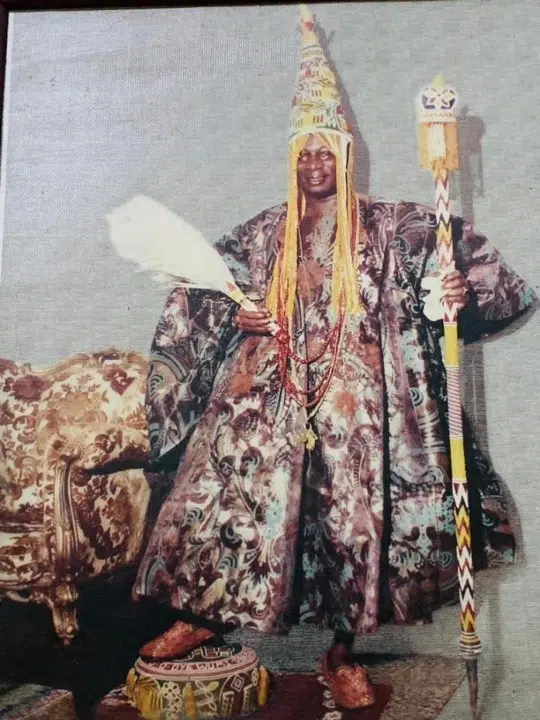
Ọba Oyèwùmí reigned for 48 years, the longest in Ògbómòṣó’s history, before his death in 2021 at the age of 95. And even on the throne, his tie to Jos and Plateau State endured, expressed through the same university chancellorship that opened this story.
Ọba Jimoh Ọládùnní Oyèwùmí’s life is, in many ways, the clearest example of what Ògbómòṣó people built in Jos: not just wealth or property, but a way of carrying discipline, independence, and dignity from one home into another, and back again.
This story is drawn from research for our upcoming documentary, A Road From Ògbómọ̀ṣọ́ to Jos, a project by myself and Àyánkọ́lá Àyánwuyì, chronicling how Ògbómọ̀ṣọ́ people built and sustained a second home on the Plateau. Private screenings hold in Jos and Ògbómọ̀ṣọ́ in September 2026, details to follow.
Business Email — hello@johnsonokunadea.com