On the 7th of July, 1958, in Room 236 of a hotel in Paris, Prince Jimoh Oládùńní Oyèwùmí made a decision that would rename a piece of Jos forever.
By then, he had grown to become one of the biggest Nigerian distributors for CFAO, a French trading house that had been moving goods across West Africa since 1887 and had gone on to become the continent’s first Ford dealership.
As one of their most valuable clients, Prince Oyèwùmí was flown to Paris to explore fresh business opportunities. There, he was lodged in a hotel called Hotel Terminus. He liked what he saw enough to decide that if he ever built something back home, this would be its name.
The plot he had his eye on was not glamorous. In 1957, he had already bought a piece of land from CFAO, a former refuse dump beside the Jos Main Market, where traders used to cross the railway line just to throw out their rubbish. It sat on Naraguta Street, later renamed Ahmadu Bello Way after the North’s first Premier. Everyone else saw a dumpsite. He saw a location no one could ignore.
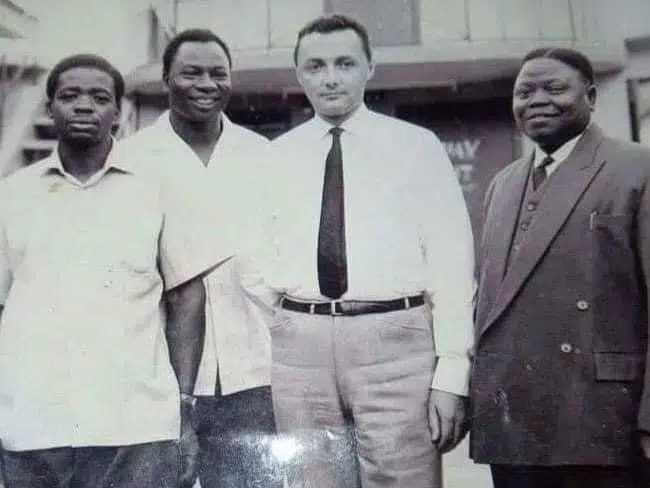
Prince Oyèwùmí built up Hotel Terminus. Shops on the ground floor were rented to companies and traders drawn by the market next door, with guest rooms and a reception hall stacked above. When it opened, it became something Jos had not quite had before, a proper modern hotel, with dance halls that would go on to host James Brown, Jimmy Cliff, King Sunny Ade, Chief Commander Ebenezer Obey, and a roll call of the biggest names in African music through the ’70s and ’80s.
About that name. When he told people back home he was calling it “Hotel Terminus” instead of the grammatically “correct” Terminus Hotel, his educated friends tried to correct him. He held his ground. Jos, after all, really was a terminus, the end of the rail line north, where trains carrying tin and cotton stopped and turned back. The name fit the town before it ever fit the building.
To this day, Terminus remains one of the busiest, most recognisable landmarks in all of Jos. He went on to build two more Hotel Terminus properties, one in Ògbómọ̀ṣọ́ and one in Òṣogbo, tracing the very route that first carried him north as a boy.
This story is drawn from research for an upcoming documentary by Ayankola Ayanwuyi and me, A Road From Ògbómọ̀ṣọ́ to Jos, chronicling how Ògbómọ̀ṣọ́ people built and sustained a second home in Jos. Private screenings will hold in Jos and Ògbómọ̀ṣọ́ in September 2026, details to follow.
Business Email — hello@johnsonokunadea.com