The lure of commerce is great for Ògbómọ̀ṣọ́ people. Anywhere trade flourished is where you’d find them. It didn’t matter how far, remote, or dangerous. In going about his trade in the early 20th century, the itinerant Ògbómọ̀ṣọ́ man first left his family behind and spent about nine months in Jos fully engaged in his trading activities alone.
During these months, he did nothing but focus his attention on his business, mostly trading, and on how to widen it and make it more profitable. He engaged in no other social activities apart from devotedly attending Church or Mosque activities and Ògbómọ̀ṣọ́ Parapọ̀ meetings, the very association Ògbómọ̀ṣọ́ people in Jos relied on specifically to protect their collective interests.
After working for nine months of the year, the months of June, July, and August were mostly spent in Ògbómọ̀ṣọ́ as vacation, together with family. It was this practice of spending three months relaxing and indulging in what looked like a sybaritic lifestyle that earned these young, energetic men the appellation “Ògbómọ̀ṣọ́ Ajílété,” in mild derision, describing one who wakes up and sits on the stump of a tree or on his mat, watching the world go by.
This pattern would continue, sometimes for years, until he was confident enough to bring his family down to Jos to help with the business. With no family left behind in Ògbómọ̀ṣọ́, the pattern of life had to change. Rather than wake up and sit outside his house to drink palm wine and play games, he now had to rise at dawn and get set for his place of trade.
Gradually, the appellation “Ajílété” changed to “Ajíṣegírí,” meaning the smart or diligent one. This shift made sense, since he now saw himself as a stranger in the land of his sojourn, whose primary aim was commerce. He was there to “jí-ṣe-gírí” and make money, not “jí-lété” and laze around.
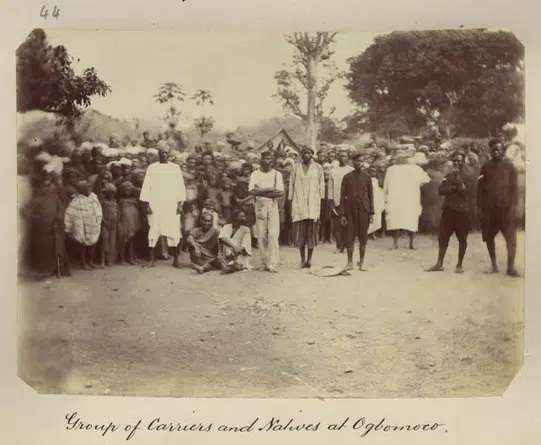
That enterprise came with its own quiet pride. As Late Oba (Dr.) Jimoh Oladunni Oyewumi once put it, Ògbómọ̀ṣọ́ people in Jos were never miners or labourers, only traders who sold their wares and nothing more, and there was real dignity in that distinction, even when a labourer sometimes earned several times more than a trader did. The traders themselves were known to scornfully rework the very word “salary” into “Sir-lari,” poking fun at a wage system that was all deference and no real money. They also picked up Hausa quickly, since it was both the language of commerce and the lingua franca of the region they now called their trading ground.
With family in Jos, some of these traders had little reason to travel down to Ògbómọ̀ṣọ́ at all, especially while still building themselves up. Some managed to go home at least once a year, during festive periods or for an occasion, with or without their family. Others didn’t bother at all, until they died, with their children growing up barely familiar with Ògbómọ̀ṣọ́.
But whether an Ògbómọ̀ṣọ́ person visits home or not, he knows he is from Ògbómọ̀ṣọ́. Most times, he knows his Agbo-Ilé, and he says it proudly everywhere: “Ọmọ Ògbómọ̀ṣọ́ nímí.”
Two years ago, my good friend Àyánkọ́lá Àyánwuyì and I began working on a documentary titled “A Road From Ògbómọ̀ṣọ́ to Jos.” It tells the beautiful story of how Ògbómọ̀ṣọ́ people found a second home in Jos. We will hold private screenings of the documentary in Ògbómọ̀ṣọ́ and Jos in the first week of September.
Business Email — hello@johnsonokunadea.com